How to Use Powder Detergent in the Dishwasher Without Clumping or Residue
How to use powder detergent in the dishwasher depends on more than simply filling the detergent compartment. Moisture exposure, rinse timing, water volume, and detergent placement can all influence how powdered formulas behave during a wash cycle.
Many people are familiar with liquid detergents or pods, so when switching to a concentrated powder formula, questions about clumping, residue, or detergent placement are common. A powder detergent may behave differently because it interacts with moisture differently before and during the wash cycle.
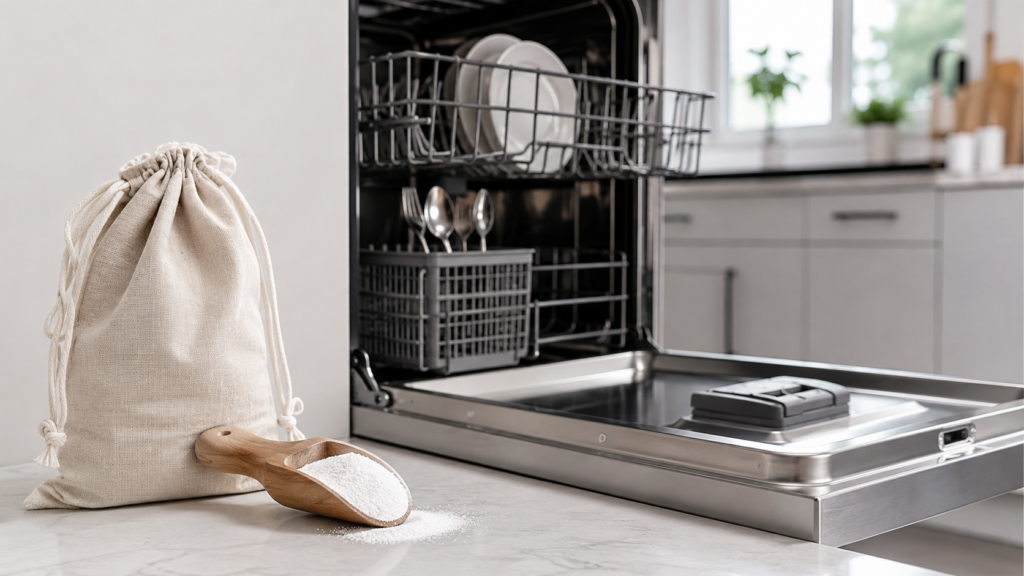
At The G Spot Detergent, our dishwasher directions recommend tossing the detergent directly into the body of the dishwasher for best results. If using the detergent door compartment, we recommend running the dishwasher immediately to help reduce moisture exposure that can contribute to clumping.
Why Powder Detergent Behaves Differently Than Pods or Liquids
Powder detergents behave differently than liquids or pods because they remain completely dry until water is introduced during the wash cycle.
Liquid detergents already contain moisture, while pods are sealed to help protect their contents until the dishwasher activates them. Powder detergents, however, are more directly affected by environmental moisture before the cycle even begins.
That means powder formulas may react more noticeably to:
- humidity
- damp detergent compartments
- steam buildup
- wet measuring scoops
- delayed dishwasher starts
- improper storage conditions
This is one reason some users notice clumping or texture changes with powdered detergents more often than with pods or liqus.
Concentrated powder formulas may also contain fewer stabilizers, fillers, or anti-caking ingredients than conventional commercial detergents. As a result, they can sometimes be more sensitive to humidity and moisture exposure over time.
Where Powder Detergent Can Be Placed in the Dishwasher
One of the most common questions surrounding dishwasher powder is whether it always needs to go inside the detergent compartment.
Many online guides simplify this by presenting the compartment as the universal placement method. In practice, powder behavior can vary depending on:
- how damp the compartment is
- how long the detergent sits before the cycle starts
- how much residual moisture is trapped inside the dishwasher
- the dishwasher’s spray pattern and rinse design
Because of this, some households find that placing powder detergent directly into the body of the dishwasher helps reduce moisture exposure before the cycle begins.
Others may still prefer using the detergent compartment successfully, particularly when the compartment is fully dry and the cycle is started immediately after loading detergent.
The goal is less about finding one universally correct method and more about understanding how moisture and timing can influence powdered detergent behavior.
Why Moisture Causes Powder Detergent to Clump
Clumping is one of the most common frustrations people report when using concentrated powder detergents.
Powder ingredients can absorb moisture from the surrounding environment before the wash cycle even starts. This moisture may come from:
- humid air
- steam trapped inside the dishwasher
- wet scoops or utensils
- damp storage areas
- residual water inside the detergent compartment
Once moisture reaches the powder, particles can begin sticking together and hardening over time.
Some concentrated powder detergents that avoid fillers, preservatives, or anti-caking agents may be more sensitive to humidity and moisture exposure than heavily stabilized commercial formulas.
That does not necessarily mean the detergent has gone bad or stopped working. In many cases, clumping is simply a physical texture change caused by moisture interacting with dry concentrated ingredients.
For The G Spot Detergent specifically, the formula contains no fillers or anti-caking agents, which means some natural clumping may occur if moisture enters the product.
Why Timing Matters When Using the Detergent Compartment
Timing can influence powder behavior more than many people realize.
If detergent sits inside a damp compartment for an extended period before the dishwasher starts, moisture may begin affecting the powder before water is intentionally introduced during the wash cycle.
This can happen when:
- detergent is loaded hours before starting the dishwasher
- residual water remains inside the compartment
- steam from previous cycles lingers inside the machine
- the dishwasher interior stays humid between cycles
Allowing powder detergent to sit inside a damp compartment for long periods may increase the likelihood of clumping or partial hardening before the wash cycle begins.
Starting the dishwasher shortly after adding detergent may help reduce prolonged moisture exposure in some situations.
Why Residue or White Film Can Happen
Residue is another common concern associated with dishwasher detergents, including powders, pods, and liquids.
When users notice cloudy dishes, leftover powder, or a chalky white film, the detergent itself is often blamed immediately. In some situations, that may partially be true. Formula balance can absolutely influence how well a detergent dissolves, rinses away, or interacts with minerals in water.
Several factors may contribute to residue formation, including:
- using too much detergent
- overloaded dishwashers
- limited rinse water
- poor spray arm circulation
- hard water
- short wash cycles
- eco cycles with lower water usage
- detergent not fully dissolving during the cycle
- ingredient imbalances within the detergent itself
Hard water is one of the biggest contributors to film or residue buildup because dissolved minerals like calcium and magnesium can interfere with cleaning and rinsing performance. Some detergent formulas are designed with ingredients that help soften water, balance pH, or break down mineral buildup to help reduce those effects.
For example:
- sodium carbonate may help soften water and improve grease breakdown
- citric acid may help break down mineral buildup and reduce film formation
- certain salt types and concentrations may help support rinse performance and mineral balance
At The G Spot Detergent, the formula intentionally uses naturally occurring ingredients that support water softening and rinse performance to help reduce residue and white film buildup as much as possible across different dishwasher conditions. The ingredient system includes sodium carbonate for water softening support, citric acid for mineral breakdown, and a measured amount of Italian sea salt to support rinse behavior and balance.
That said, dishwasher performance can still vary from one household to another because rinse behavior also depends on:
- local water hardness
- dishwasher design
- rinse cycle length
- water temperature
- detergent amount
- overall appliance condition
This is why residue concerns are often more complex than simply determining whether a detergent is “good” or “bad.” In many cases, the outcome depends on how the detergent formula interacts with the specific dishwasher environment it is being used in.
Why Concentrated Powder Formulas May Behave Differently
Many consumers expect all dishwasher detergents to behave identically regardless of format or ingredient composition.
But concentrated powder formulas can behave differently than pods or liquid detergents because they may contain:
- fewer fillers
- fewer anti-caking ingredients
- different moisture sensitivities
- different dissolving characteristics
That difference is not automatically positive or negative. It simply means the formula may respond differently to humidity, storage conditions, water exposure, and dishwasher settings.
For example, concentrated powder detergents may:
- react more noticeably to moisture exposure
- require proper storage to remain loose
- show clumping more visibly over time
- dissolve differently depending on rinse conditions and water flow
Understanding these differences can help set more realistic expectations around how concentrated powder detergents behave in everyday household environments.
Practical Tips for Reducing Clumping or Residue
A few practical adjustments may help improve consistency when using powdered dishwasher detergent:
- Store detergent in a cool, dry place
- Keep containers sealed between uses
- Avoid introducing wet scoops into the product
- Check for standing water inside the detergent compartment before adding powder
- Avoid overcrowding dishes
- Make sure spray arms can rotate freely
- Use appropriate detergent amounts for the load size
- Consider additional rinse cycles if residue persists
- Avoid allowing powder detergent to sit in damp compartments for extended periods
Storage conditions can also influence texture over time. For The G Spot Detergent, the storage directions recommend keeping the bag securely closed and minimizing excess moisture exposure whenever possible.
Setting Expectations Around Powder Detergent Behavior
One of the biggest misconceptions surrounding powder detergent is the idea that clumping automatically means the product is failing.
In reality, concentrated dry ingredients can naturally react to humidity and moisture exposure over time, especially in kitchens, laundry rooms, or other humid household environments.
That is why understanding:
- ingredient behavior
- dishwasher mechanics
- rinse conditions
- storage environment
- detergent timing
can matter just as much as the detergent itself.
Rather than viewing all clumping or residue as proof a detergent “doesn’t work,” it may be more useful to evaluate the broader cleaning system involved, including appliance conditions, water exposure, dishwasher settings, and how the product is being stored and used.