Holiday Laundry Habits That Can Quietly Damage Your Clothes
The holiday season changes how laundry gets done. Loads get larger, cycles get faster, and decisions are made quickly because time is limited. None of this is careless. It is a response to increased demand. More outfits, more linens, more towels, more people, and less margin for slowing down.
What often goes unnoticed is that laundry systems respond to stress in very specific ways. Fabrics do not just wear out from age. They break down through repeated mechanical action, chemical exposure, and heat. During the holidays, those stressors tend to stack up.
Understanding how everyday laundry habits affect fabric structure makes it easier to protect clothes without adding pressure or perfectionism to an already busy season.
Why holiday laundry creates more fabric stress
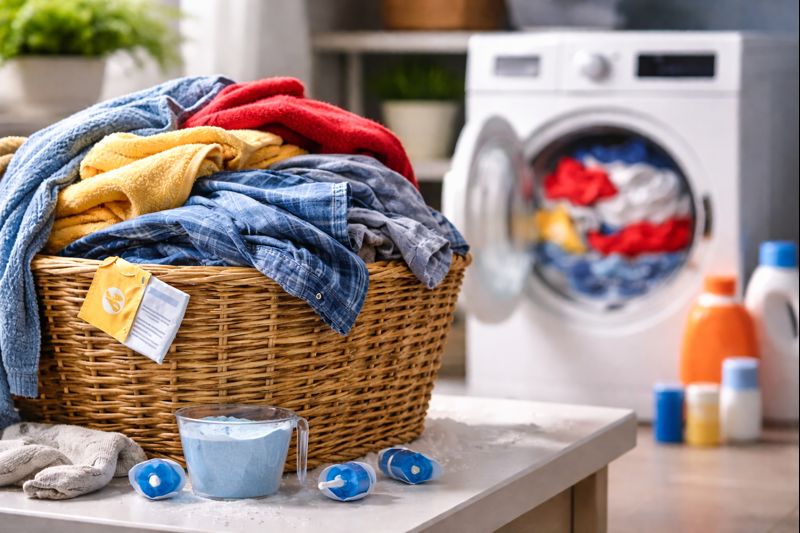
Most fabric damage does not come from dirt. It comes from movement. Every wash cycle applies mechanical force as clothes lift, fall, twist, and rub against one another. That force increases when loads are heavier, cycles are faster, or water movement is restricted.
During the holidays, laundry patterns often shift in predictable ways:
- Washers are filled closer to capacity to reduce the number of loads
- Speed or express cycles are chosen to keep laundry moving
- Detergent is poured quickly rather than measured
- Mixed loads are washed together to save time
Each of these choices changes how the washing system behaves.
Rushing cycles and mechanical agitation
Faster cycles are not simply shorter versions of gentle washes. Many quick cycles increase agitation to compensate for reduced soak time. More aggressive movement helps loosen soil quickly, but it also increases friction.
From a fabric perspective:
- Increased agitation causes fibers to rub against each other more frequently
- Surface fibers break first, leading to pilling and fuzzing
- Repeated stress weakens yarns, especially in knits and blended fabrics
This is why clothes washed repeatedly on fast cycles may feel thinner or rougher even when they still look clean.
Overloading the washer and restricted water flow
A washer relies on space to clean effectively. Clothes need room to lift, separate, and rinse. When the drum is too full, water cannot circulate properly.
Overloading creates several mechanical issues:
- Clothes press tightly against each other, increasing friction at seams and edges
- Detergent and soil are not rinsed evenly
- Fabric folds stay compressed, increasing crease stress
The result is not always visible damage right away. Over time, however, overstressed areas such as collars, cuffs, waistbands, and underarms show wear first.
Overdosing detergent and chemical residue
Using more detergent than needed is common during high-volume laundry periods. It feels logical. More clothes must need more soap. In reality, detergent is designed to work within a narrow concentration range.
Excess detergent creates problems that are often misunderstood:
- Surfactants that are not rinsed away stay in fabric fibers
- Residue stiffens fibers, making them more prone to breakage
- Trapped detergent can attract soil and odors, leading to rewashing
Rewashing increases mechanical wear, which compounds the original issue. Clothes may feel less soft or appear dull even though they are being washed more often.
Ignoring care labels and fabric design limits
Care labels are not warnings. They are performance guidelines based on how fibers react to water, heat, and agitation.
When care instructions are ignored during mixed loads:
- Delicate fibers are exposed to temperatures they cannot tolerate
- Elastic components lose recovery due to heat stress
- Finishes designed for softness or wrinkle resistance break down faster
This is especially common during the holidays when items like dress clothes, seasonal sweaters, and decorative linens are washed alongside everyday garments.
Overwashing and cumulative wear
One of the most common questions people ask is whether overwashing actually damages clothes. The answer is yes, but not because washing is harmful on its own. Damage comes from repetition.
Every wash applies:
- Mechanical force from agitation
- Chemical exposure from detergent
- Thermal stress if warm or hot water is used
During busy seasons, clothes are often washed after fewer wears due to odor, spills, or convenience. While this may be necessary, it increases cumulative stress over a short period of time.
Practical ways to reduce damage without slowing everything down
Fabric care during the holidays does not require perfect habits. Small adjustments can meaningfully reduce wear without adding extra steps.
Helpful practices include:
- Leaving space at the top of the drum so clothes can move freely
- Measuring detergent once rather than estimating
- Using cooler water for mixed or lightly soiled loads
- Washing items inside out to reduce surface friction
- Grouping visibly delicate items when possible, even if only occasionally
These choices reduce stress on fabrics while still respecting time constraints.
Setting realistic expectations
No laundry routine eliminates wear completely. Clothes are consumable by design. Fibers break down as part of normal use.
What matters most is understanding:
- Damage is gradual, not immediate
- One rushed load does not ruin clothing
- Repeated habits shape long-term outcomes
- Convenience and fabric care always involve tradeoffs
Awareness creates flexibility. It allows households to choose when to prioritize speed and when to prioritize longevity.
Closing perspective
Holiday laundry is not a failure of care. It is a response to increased demand. When people understand how laundry systems apply stress to fabrics, they gain the ability to make informed decisions without guilt or pressure.
At The G Spot Detergent, the goal is education first. When households understand how washing systems work, they can adapt routines to fit real life while still protecting the clothes they rely on every day.