Does Washing in Cold Water Really Save Energy? A Realistic Breakdown
Washing laundry in cold water is often described as an easy way to save energy. You may hear that it lowers utility bills, reduces environmental impact, and works just as well as warmer cycles. While there is truth behind those ideas, the reality is more layered than a simple yes or no.
Whether cold water actually saves energy depends on how laundry systems work inside a real household.
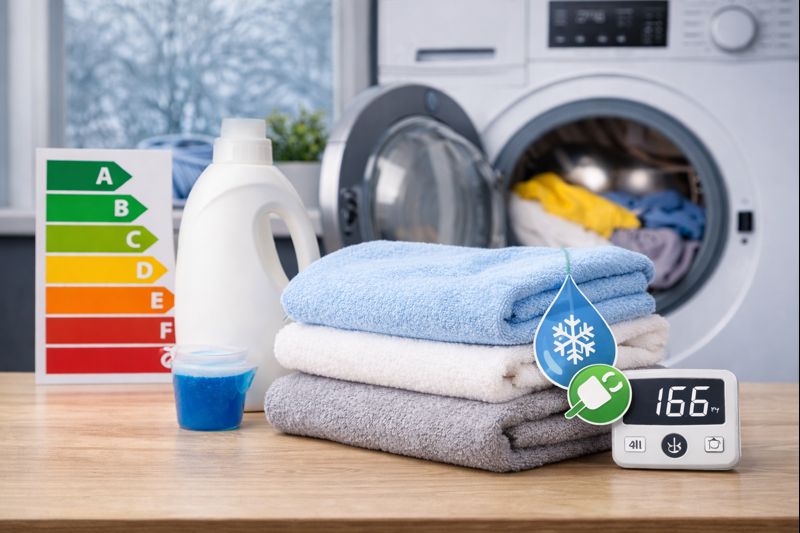
Where energy is actually used during laundry
Most people assume the washing machine itself is the main source of energy use. In reality, that is usually not the case.
In a typical home:
- The washing machine uses electricity to agitate, spin, and control the cycle.
- The water heater uses gas or electricity to raise water temperature.
- Heating water requires significantly more energy than running the machine.
Because of this, the temperature setting you choose often has a larger impact on energy use than the wash cycle length or machine model. When cold water is selected, the energy required to heat water is largely avoided, which is where most potential savings come from.
How cold water can reduce energy use
Cold water washing can lower overall energy use, but the amount saved is not the same for every household.
Several factors influence how meaningful the difference is:
- Water heater type: Electric water heaters typically use more energy per gallon heated than gas systems.
- Load size: Larger loads require more water, increasing the energy gap between hot and cold cycles.
- Laundry frequency: Homes that wash more often may see greater cumulative savings.
- Starting temperature: Switching from hot to cold usually saves more energy than switching from warm to cold.
Cold water washing does not eliminate energy use entirely. The washing machine still consumes electricity for motors, pumps, and electronic controls during every cycle.
What this looks like in everyday households
In practice, cold water washing works well for many situations, but not all.
Cold water is often effective for:
- Light to moderate everyday soil
- Regular clothing worn for daily activities
- Fabrics that benefit from gentler washing
However, there are situations where warmer water may still make sense:
- Heavily soiled loads
- Oil-based or greasy stains
- Certain hygiene-focused washes
- Very cold incoming tap water that can reduce cleaning performance
If clothes need to be re-washed because a cold cycle did not fully clean them, some of the expected energy savings can be reduced or lost.
Setting realistic expectations
Cold water washing can reduce energy use, but it is not a guarantee or a universal rule.
A realistic way to think about it:
- The savings are real but variable
- Results depend on household systems and habits
- Cold water does not replace warm or hot cycles in every scenario
- The main benefit comes from reduced water heating, not the washing machine itself
For many households, cold water works best as a default choice rather than a strict requirement. Mixing cold, warm, and occasional hot cycles based on load needs often leads to better long-term outcomes than following a single rule.
Closing context
Understanding where energy is used during laundry helps remove confusion around cold water washing. It is a useful option, especially for everyday loads, but its impact depends on how your home, water heater, and laundry routine are set up.
At The G Spot Detergent, education comes first. When people understand how laundry systems work, they are better equipped to make choices that fit their household, their clothes, and their values without relying on oversimplified advice.
Sources
- ENERGY STAR — Clothes Washers
https://www.energystar.gov/products/appliances/clothes_washers - Consumer Reports — Washing Machines & Energy Use
https://www.consumerreports.org/appliances/washing-machines/